
Role In Production
What Worked
What Didn’t
Tool
CASE STUDY
Verdict
I Made a Film About Learning AI Using AI
After 26 years in broadcast & enterprise streaming, I needed to prove I could work with generative AI tools. So I did what any reasonable media executive would do: I wrote a short film about the experience, then produced it entirely with AI tools. Here's what that actually cost, took, and taught me.
Total Spend
$390
Subscriptions + credits/tokens
Time Invested
~72hrs
6 twelve-hour production days
Clips Rendered
55+
RunwayML alone
Finished Film
10min
5 acts + an easter egg

ChatGPT - Upload Geoff - Prompt - Design a raw comic book style character of me wearing a chef's toqueTHE BRIEF
A Short Film. Five Acts. Zero Prior AI Production Experience.
The project started as a prompt - literally. After losing a 26-year position in broadcast media operations, I needed to close a gap: every job description in media was asking for AI fluency, and I didn't have it on paper.
The plan: write a humorous short film about the job search itself, then produce it entirely with generative AI tools. The film would become its own proof of concept, evidence that someone with deep production instincts could learn, navigate, and deploy the full stack of AI video tools.
The script, titled "Hat Trick," follows a media production veteran through job loss, AI education, an identity crisis solved by creating five cartoon superheroes, and ultimately a new chapter. Each act was designed to showcase a different AI visual style: photorealistic, cinematic, 3D animation, mixed media, and Pixar-quality character work.
What the project had to do:
Tell a real story, in a funny way, while simultaneously demonstrating the range of what generative AI can visually produce. It had to feel intentional, not accidental, like a media professional had made it, not a first-timer poking at prompts.
The workflow: script development in Claude → scene breakdowns and RunwayML prompts → image generation in ChatGPT and MidJourney → video rendering in RunwayML and Pika → voice in ElevenLabs → music separation via Lalal.ai → manual assembly in an NLE.
In other words: a full production pipeline, built from scratch, using tools that didn't exist two years ago.
THE FILM - “Hat Trick”
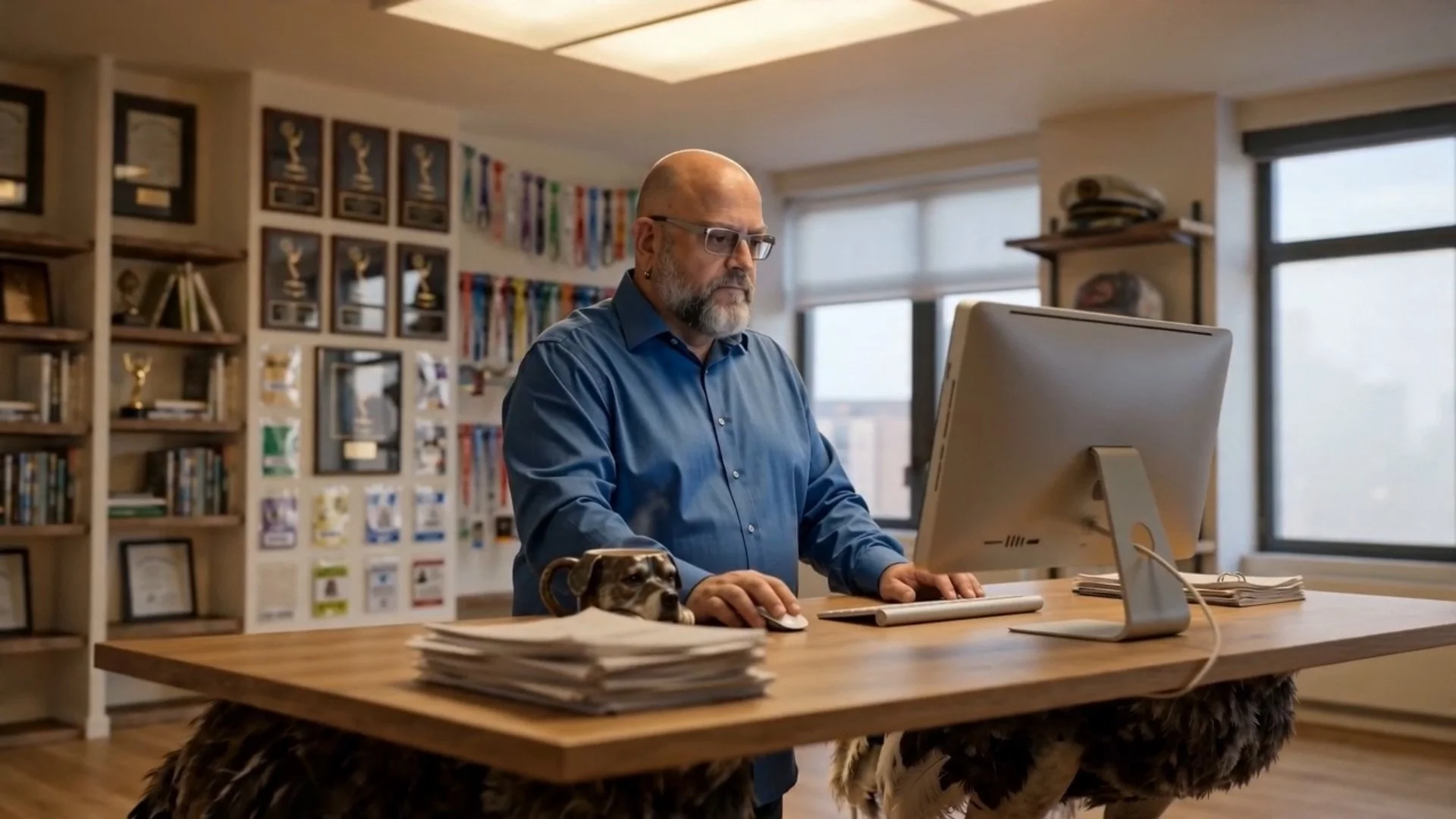
HAT TRICK - A Short Film About Learning AI While Losing Your Mind (Slightly). Runtime: ~10 minutes.
WHAT I DISCOVERED
Eight Things Nobody Tells You Before You Start.
01
It's Way More Manual Than Advertised
The tools are impressive. The process is labor-intensive. Every clip requires hand-holding, close QA, and a high tolerance for subtle (and sometimes glaring) mistakes. "AI does it for you" is marketing copy. The reality is closer to a very fast, very unpredictable intern.
02
Continuity Is the Hardest Problem
When you're limited to 15–30 second clips, continuity breaks. The same reference material, fed to the same tool, will produce wildly different visual results on separate renders. You can't assume any two clips will match. Plan for this, or spend days re-rendering.
03
The Cost Sneaks Up on You
$90 in subscriptions. $300 in credits and tokens. For a single short film. Platforms default to annual billing, read the fine print and go monthly if you're not certain you'll use it regularly. And if you have to re-render something because of a spelling error, that costs real money.
04
Render Time Is a Production Variable
Renders are not instant. Time management and multitasking become essential workflow tools - submit a batch, work on something else, come back to QA. Treating render time like dead time is how you waste 30% of your production hours.
05
The Landscape Moves Faster Than You Do
By the time you master one tool, two new ones have launched. The metric that matters isn't which tool is best right now - it's whichever one produces the most consistent results per dollar per hour. A cheap tool that requires eight re-renders isn't cheap.
06
Be Explicit. Then More Explicit.
AI does not read minds. The more precise the description, the better the output. Small detail: AI mispronounces "Geoff." It has to be spelled "Jeff" phonetically or you'll pay to re-render voice tracks. Learned this the hard way. Now it's in every brief I write.
07
It Gets Easier, But Not Intuitive
There's a real learning curve, and it doesn't flatten until you've spent serious time with a tool. Efficiency gains come from pattern recognition, not from reading documentation. You have to make mistakes to understand what the tools are actually doing.
08
AI Prompting Defies the Insanity Quote
Einstein (allegedly) said “insanity is doing the same thing over & over and expecting different results. With AI prompting, “doing the same thing over and over and getting different results will drive you insane.” That's not a bug. It's the entire nature of the medium - and you have to make peace with it.
"I rendered at least 55 clips in RunwayML, created 36 images in ChatGPT and MidJourney, and spent approximately 72 hours on a 10-minute film. If you're measuring that against replacing a large film crew, it's a dramatic savings. If you're comparing it to a two-person crew with a camera - the math gets complicated fast."
- Geoff Nelson, from production notes
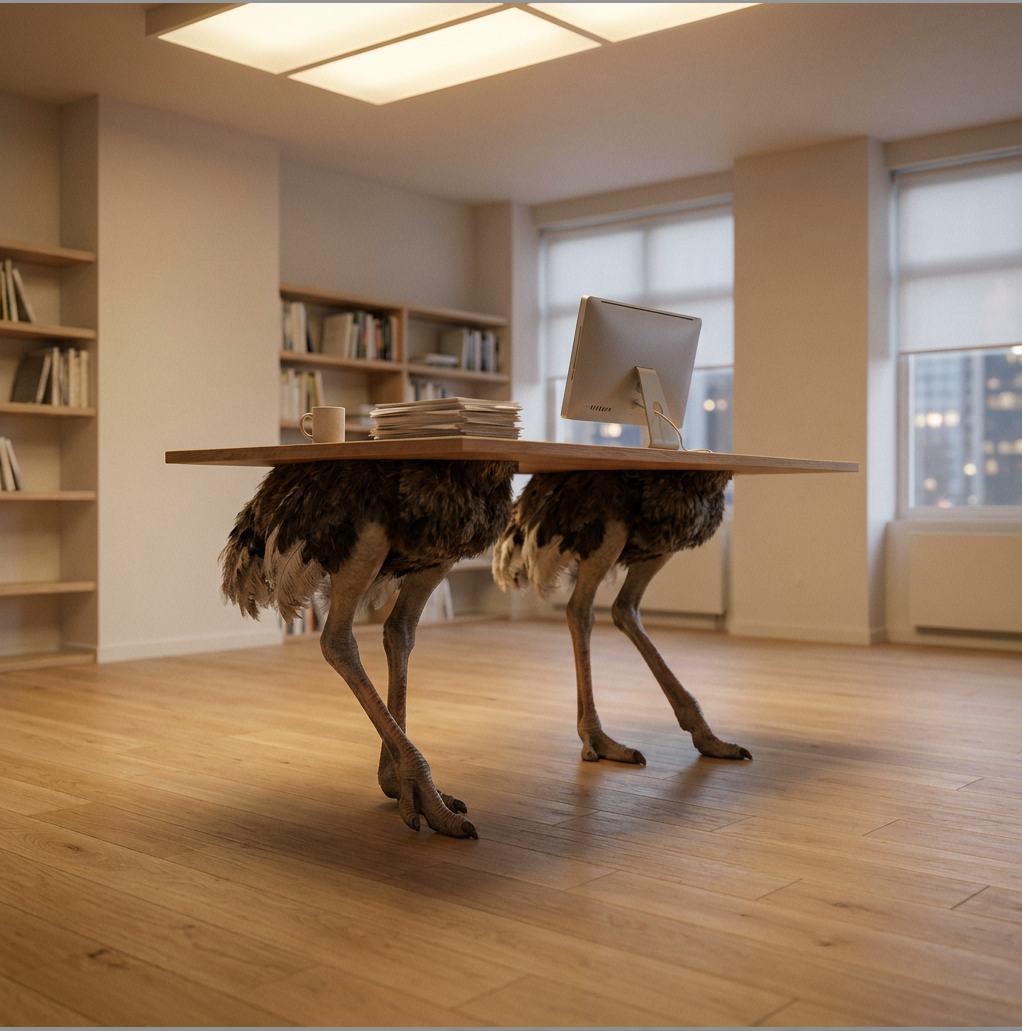
ChatGPT - Prompt - an image of a stand-up desk with ostrich legs for desk legs
THE STACK
Every Tool in the Pipeline. Honestly Reviewed.
This is not a sponsored review. These are the real-world notes from using each tool under deadline pressure, with actual money on the line, for an actual finished film.
Claude
Script writing, scene breakdowns, RunwayML prompt generation
Nuanced, producer-minded output. Handles complex multi-act structure. Great for translating scenes into technical prompts.
Occasionally verbose. Hedges when you want confidence.
Core Tool
ChatGPT
Image generation, character development, prop design
Fast. Good at commercial-clean imagery. Excellent for consistent character design across a project.
Less stylistic range than MidJourney. Can feel generic.
Keep
MidJourney
Cinematic stills, painterly aesthetics, hero art
Highest visual ceiling of the image tools. The dramatic, film-quality frames came from here.
Steeper prompting curve. Discord-based workflow adds friction.
Keep
RunwayML
Primary video generation - 55+ clips rendered
Best-in-class cinematic video output. Reference-image consistency is strong. The tool the film is built on.
Cannot produce clips without embedded music in Agent by default. Dialogue and V/O generate simultaneously - had to work around this. 15-30 second limit creates continuity challenges.
Essential/Painful
ElevenLabs
Voice over generation after RunwayML workarounds failed
Excellent voice replication. Clean output. The switch from RunwayML's built-in V/O was the right call.
Phonetic spelling required for names. "Geoff" becomes "Jeff" in every brief.
Keep
LALAL.AI
Music removal from RunwayML clips
Does exactly one thing. Does it well. Essential for getting clean audio beds from generated clips.
Adds a step to an already-manual workflow. Wouldn't be needed if RunwayML had better audio controls.
Keep (As Workaround)
Pika
Secondary video generation, animation tests
Good for shorter, more stylized clips. Faster iteration than RunwayML.
Lower visual ceiling for photorealistic content. Best for stylized or animated sequences.
Supplemental
Adobe Firefly
Experimentation, emerging capabilities
Impressive in demos. Shows where the medium is heading.
Landscape is moving fast. Evaluate on a project-by-project basis.
Watch Closely
NLE (Manual Edit)
Final assembly, transitions, graphics, audio mix
Still necessary. AI tools don't pad head/tail for transitions - you have to edit for it manually or prompt specifically.
AI tools were not able to produce broadcast-ready graphics with correct spelling. All lower-thirds and titles done manually.
Still Required
HOW IT HAPPENED
Six Days, One Film, Zero Sleep After Day Four.
Day 1
Script Development - Claude + Manual Editing
Developed the concept, wrote the initial prompt, iterated the full five-act script. Claude handled structure and dialogue. Human editing shaped voice and comedy timing. Act structure established: notification → network reality check → AI education montage → superhero identity construction → interview + resolution.
Day 1-2
Scene Breakdown + Prompt Translation
Each act translated into 15–30 second scenes. Claude generated RunwayML-specific prompts for each shot, camera language, lighting direction, visual style, subject positioning. 36 images generated in ChatGPT and MidJourney for reference material and character design.
Day 2-3
Image Generation — Character Design & Hero Art
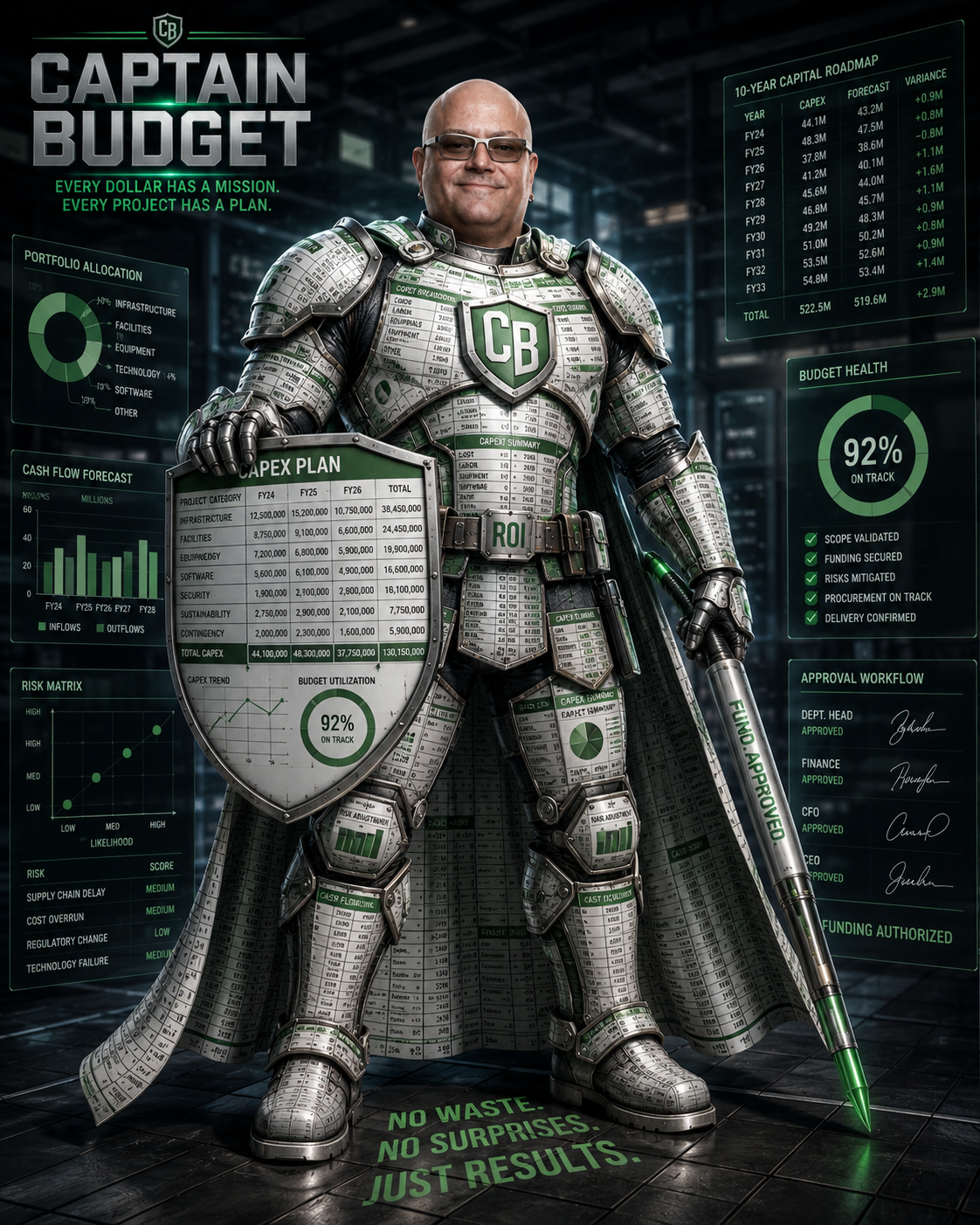
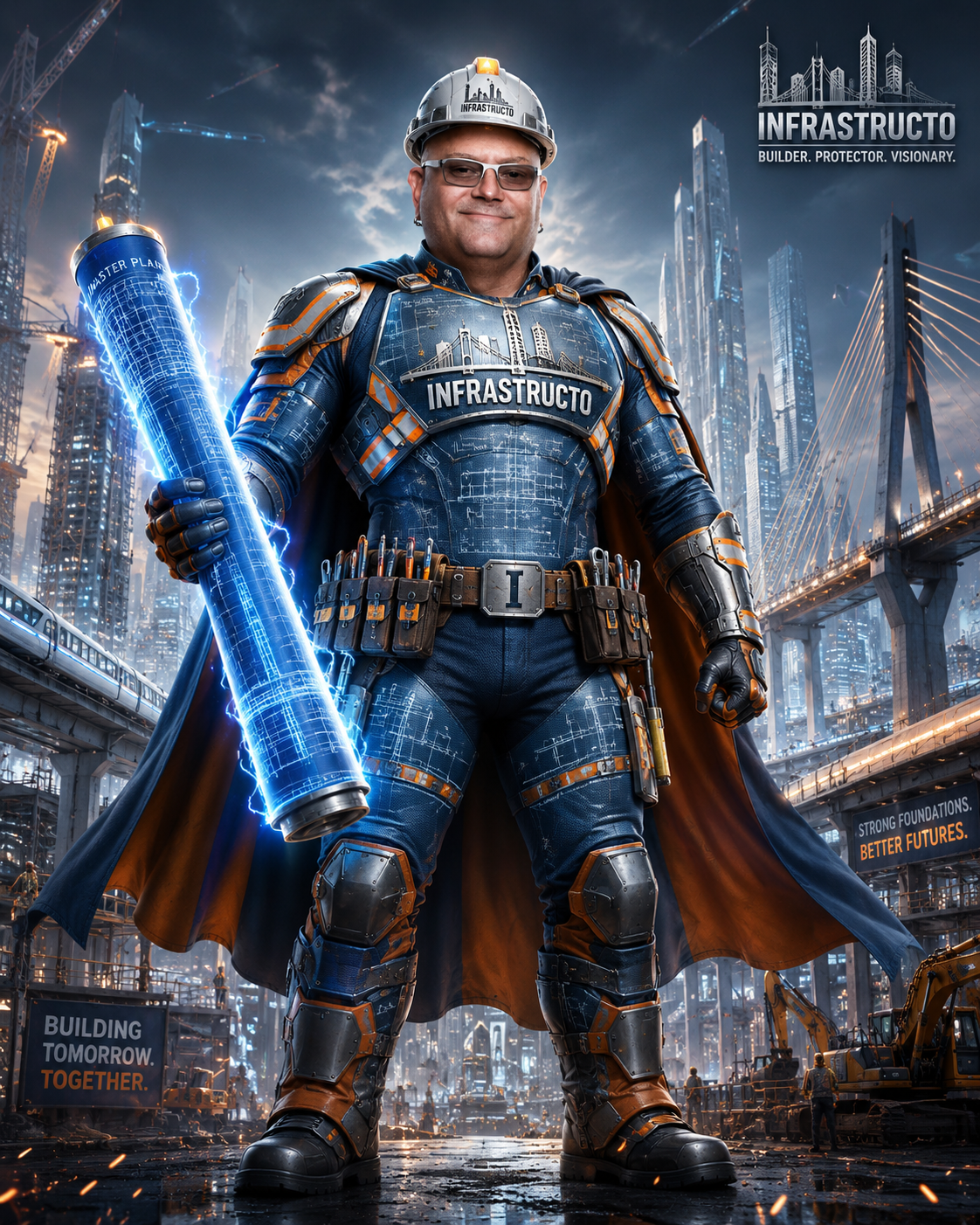
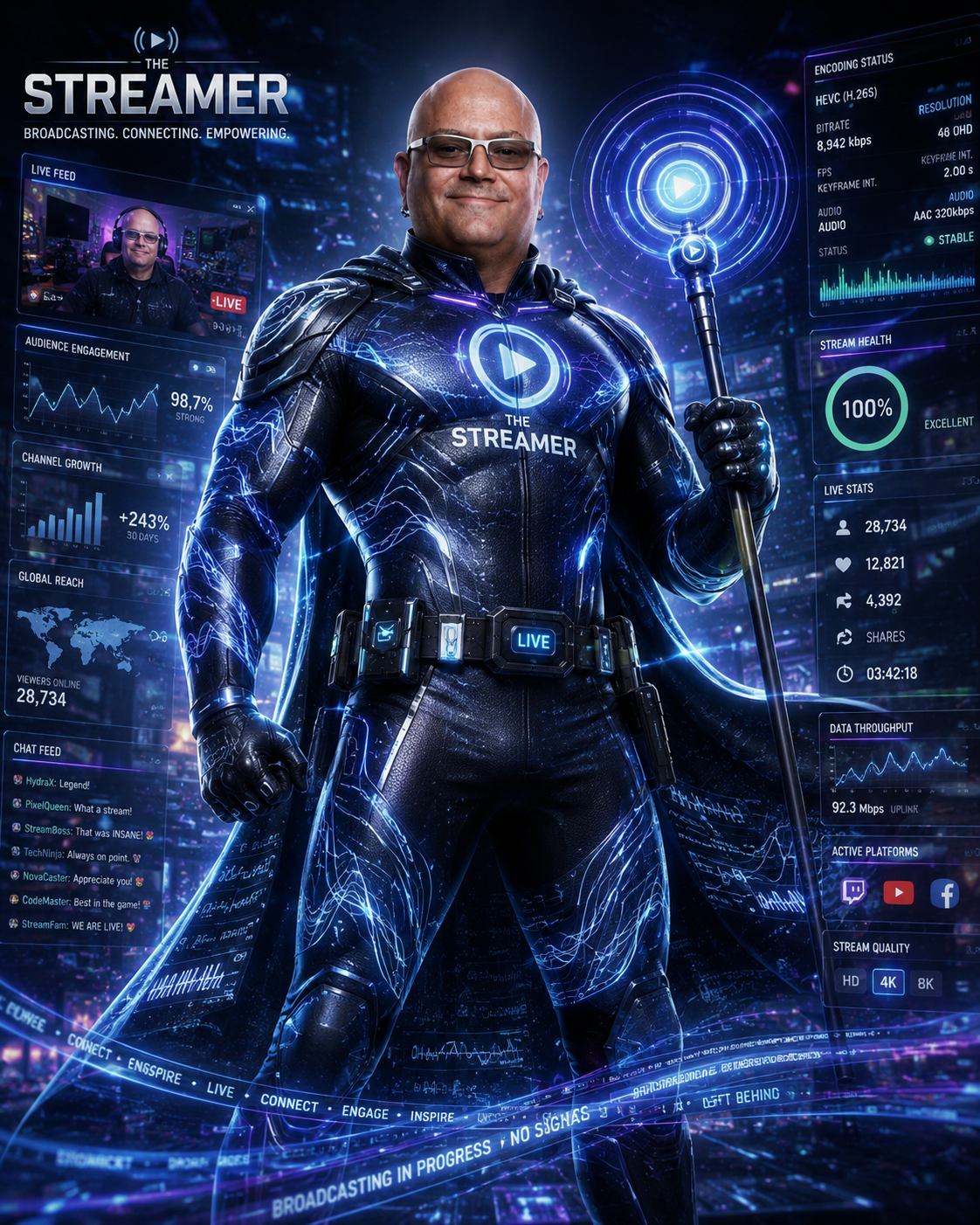
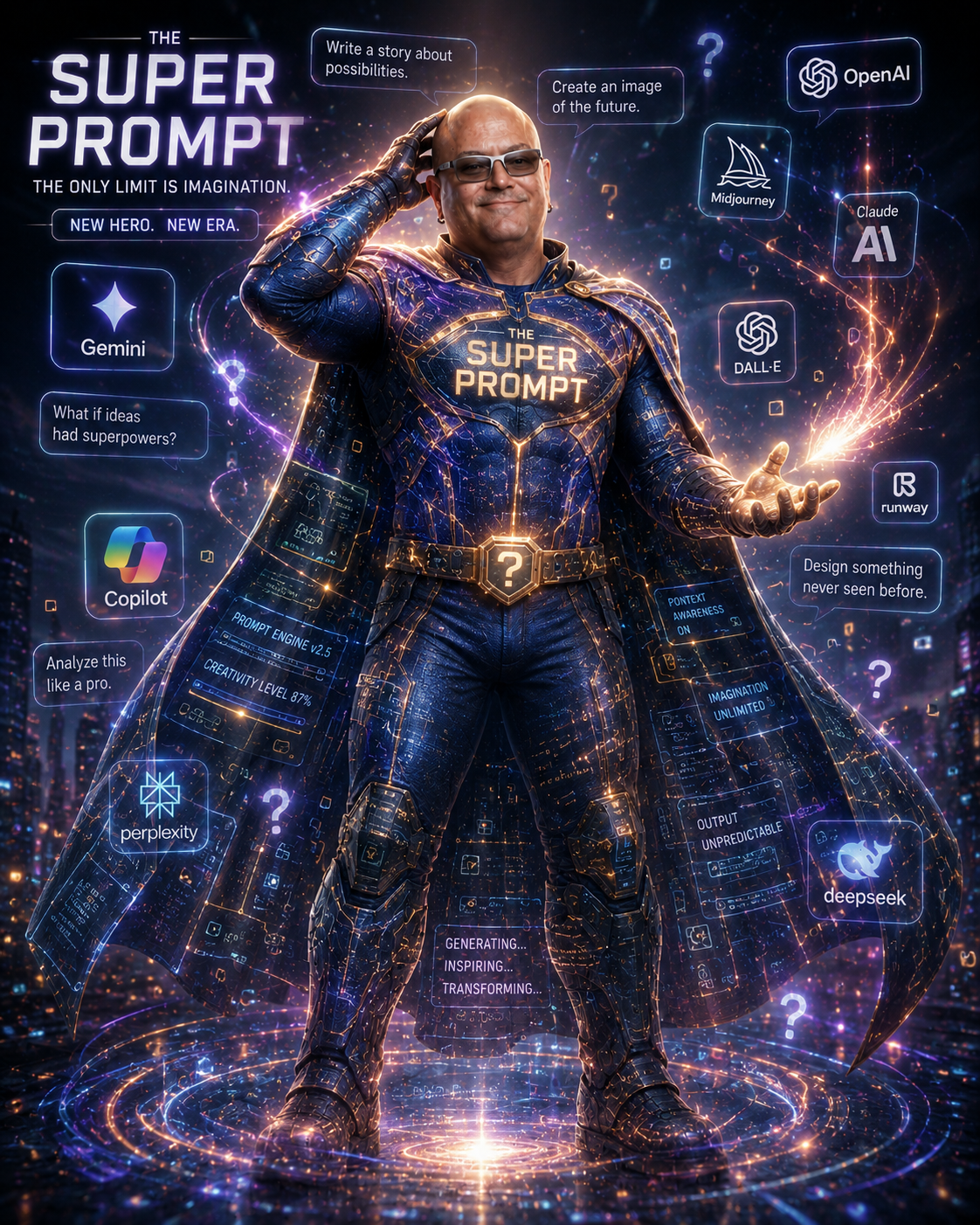
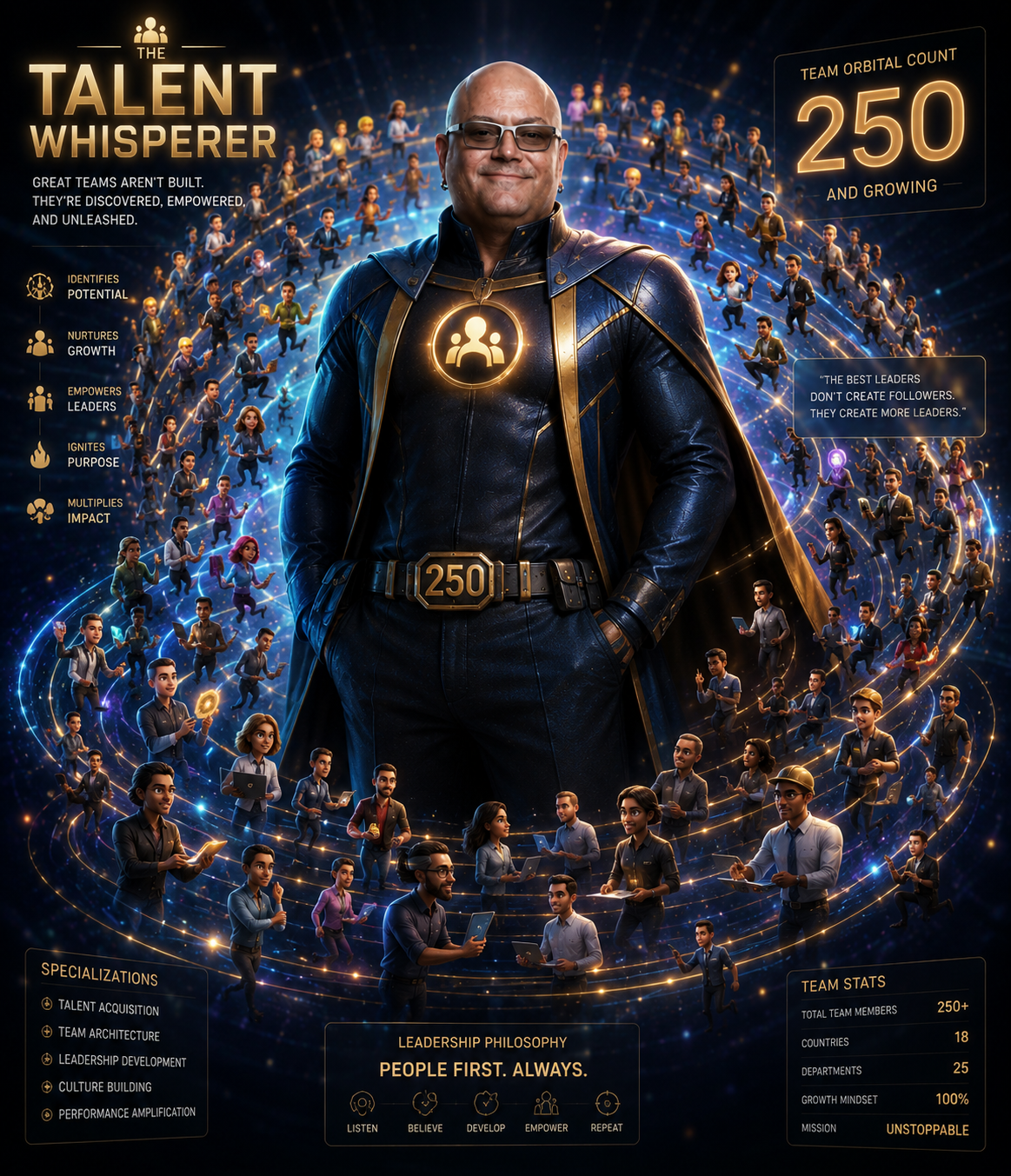
Five hero characters built: Infrastructo, The Streamer, Captain Budget, The Talent Whisperer & The Super Prompt. Each required multiple reference renders to establish consistent visual identity across the film. Pixar-quality 3D character aesthetic targeted throughout.
Day 3-5
Video Production - RunwayML Primary Rendering
55+ clips rendered. RunwayML workarounds discovered and implemented: Lalal.ai for music removal, ElevenLabs for V/O after RunwayML's simultaneous dialogue/VO generation proved unworkable. Continuity managed clip-by-clip via careful reference image strategy. This phase took the most time, money, and patience.
Day 5-6
Audio - ElevenLabs Voice Generation
All narration and character dialogue produced in ElevenLabs. Phonetic spelling protocol established ("Jeff" not "Geoff") after costly re-renders. Music bed selected and laid in post after Lalal.ai processing of all RunwayML clips.
Day 6
Manual Assembly + Graphics
All clips assembled manually in NLE. Transitions required clip padding - either via specific prompting or creative edit decisions. All on-screen text and graphics created manually due to AI's imprecision with spelling. Final composite output, color grade, and delivery.

THE MATH
What This Costs. Honestly.
Total project spend: approximately $390. That breaks down to roughly $90 in platform subscriptions and $300 in generation credits and tokens across RunwayML, MidJourney, ChatGPT, ElevenLabs, and Lalal.ai.
Time investment: approximately 72 hours across six production days, for a 10-minute finished film.
Whether that's a bargain depends entirely on what you're comparing it to. Against a traditional film crew, lighting package, location fees, and post-production house? The savings are substantial. Against a two-person crew with a camera and an editor? The math gets harder to justify.
The variables that change the equation:
Re-renders are not free. Every mistake: a wrong name pronunciation, a continuity break, a shot that misreads the prompt, costs real money. QA discipline is a direct cost-control tool. The more precise your input, the fewer re-renders you need.
Subscription management matters. Every platform defaults to annual billing. If you sign up for five tools to test them and forget to cancel three, you've just added several hundred dollars to your overhead. Go monthly until you know what you'll actually use.
The best efficiency gain: learning to batch. Submit renders, work on something else, come back to QA. Treating render time as downtime is the most expensive habit in AI video production.
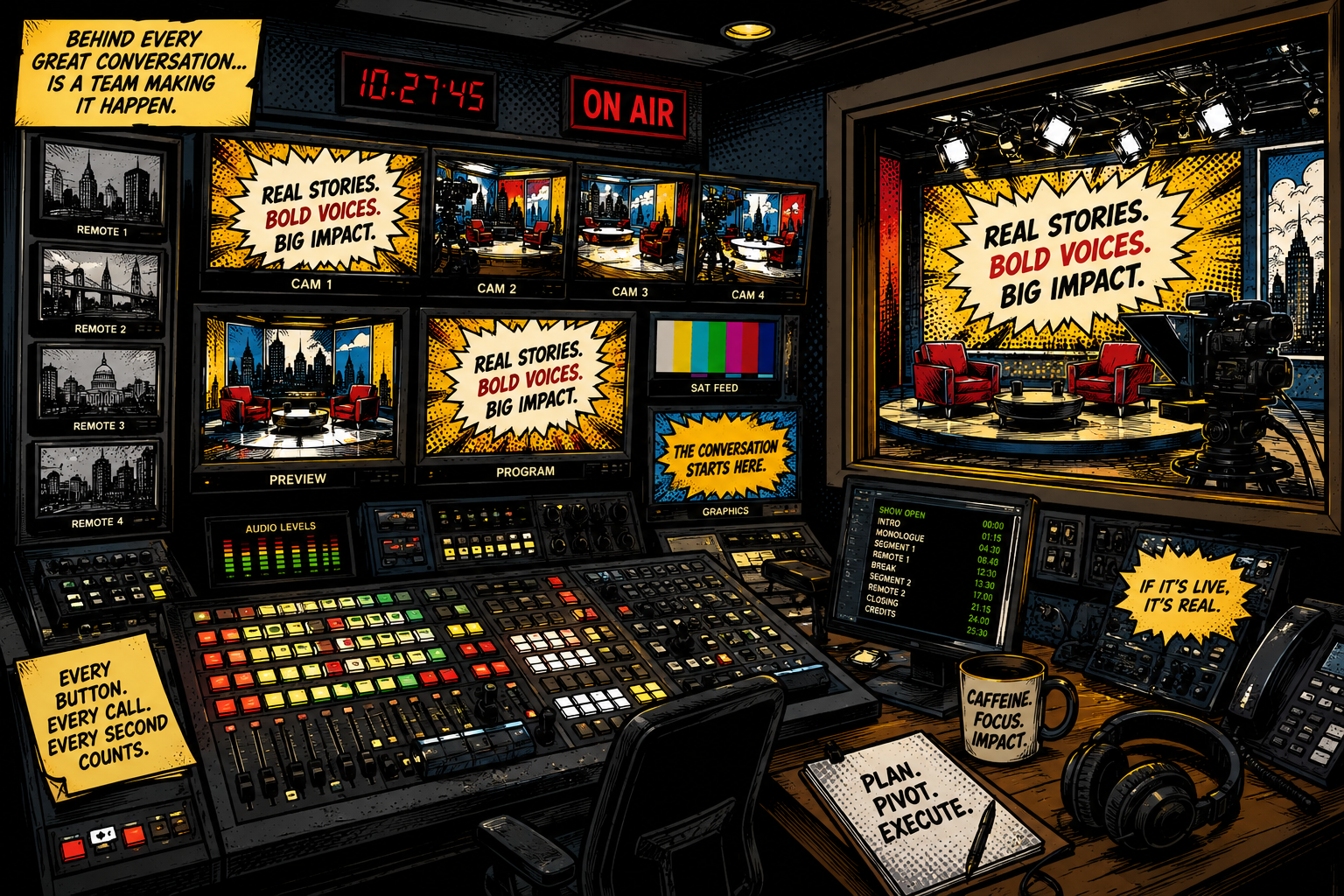
ChatGPT - Prompt - comic book style control room
ChatGPT - Prompt - comic book style television studio
ChatGPT - Prompt - comic book style red carpet event
ChatGPT - Prompt - comic book style Times SquareWHAT THIS PROJECT REQUIRED
New Skills. Built in Six Days. On a (Self Imposed) Deadline.
The tools are learnable. The harder skills: production judgment, prompt discipline, QA rigor, cost management, workflow design, those transfer directly from traditional media production. What this project proved is that experience in one medium accelerates competency in the next.
∞ Prompt Engineering
∞ Generative Video Production
∞ AI Image Generation
∞ Voice Synthesis (ElevenLabs)
∞ RunwayML
∞ MidJourney
∞ Multi-Tool Workflow Design
∞ Audio Separation
∞ Continuity Management
∞ Budget & Credit Optimization
∞ Script-to-Screen AI Pipeline
∞ Character Design (AI)
∞ Mixed Media Production
∞ QA For AI-Generated Content
∞ NLE Post-Production
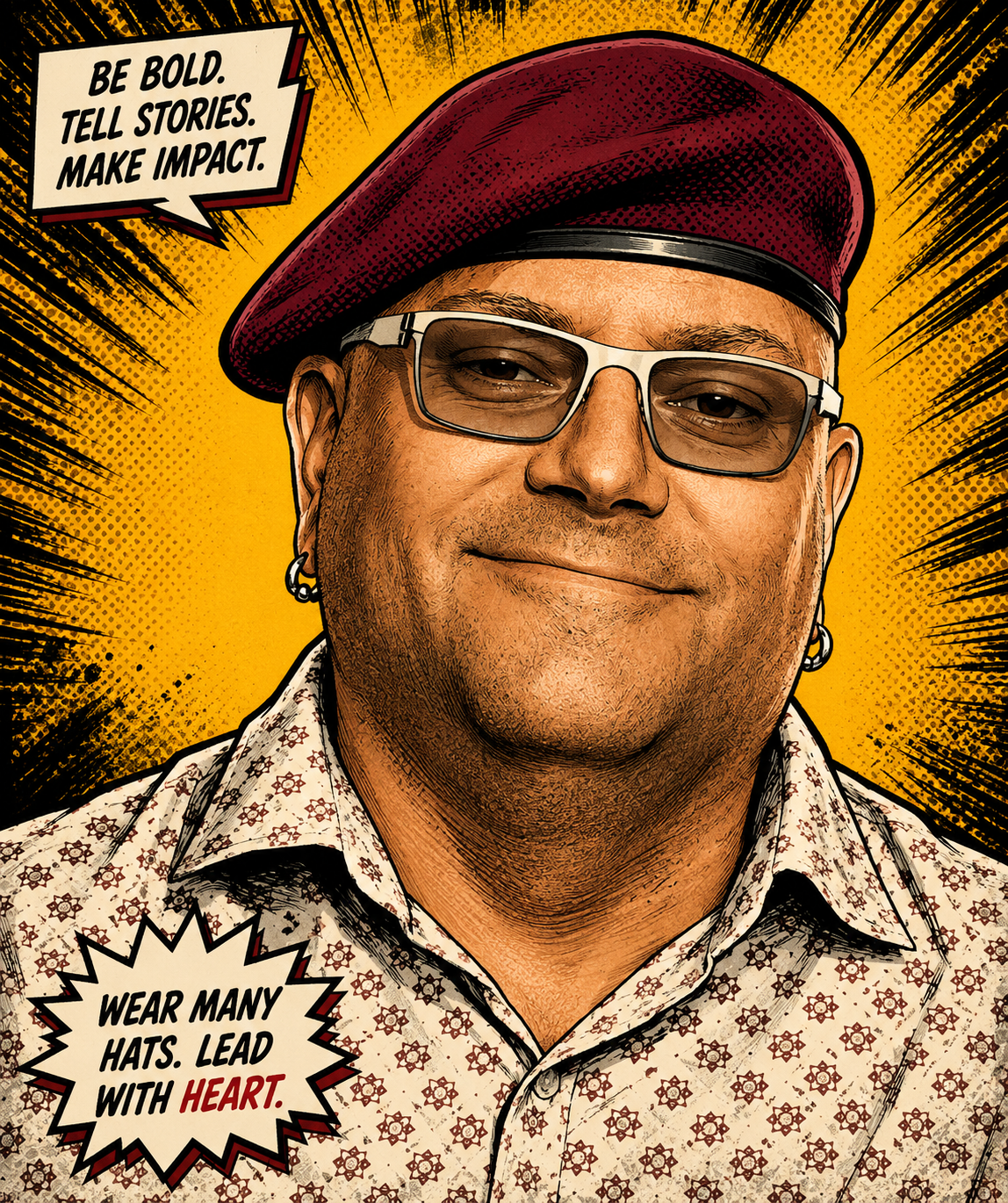
ChatGPT - Upload Geoff - Prompt - design a comic book style character of me wearing a maroon beret"The tools change. The technology changes. The company names change. But the work, the actual work of building something great, of figuring it out under pressure, that never changes."
- Jeff (Geoff) Nelson, Act 5, Hat Trick

ChatGPT - Upload Sherlock Image - Prompt - coffee cup shaped like dog’s head